
Capos, Capos, Capos!!!
If you are on social media, even for a few minutes a day and you play guitar, a capo add or two (or ten) will pop up on your feed. Each claiming to be the end all be all be all of capos. Black Mountain is not an exception to this observation but is there some teeth to this declaration? I bought a Black Mountain Capo to find out for myself to see if it’s true or just good marketing.
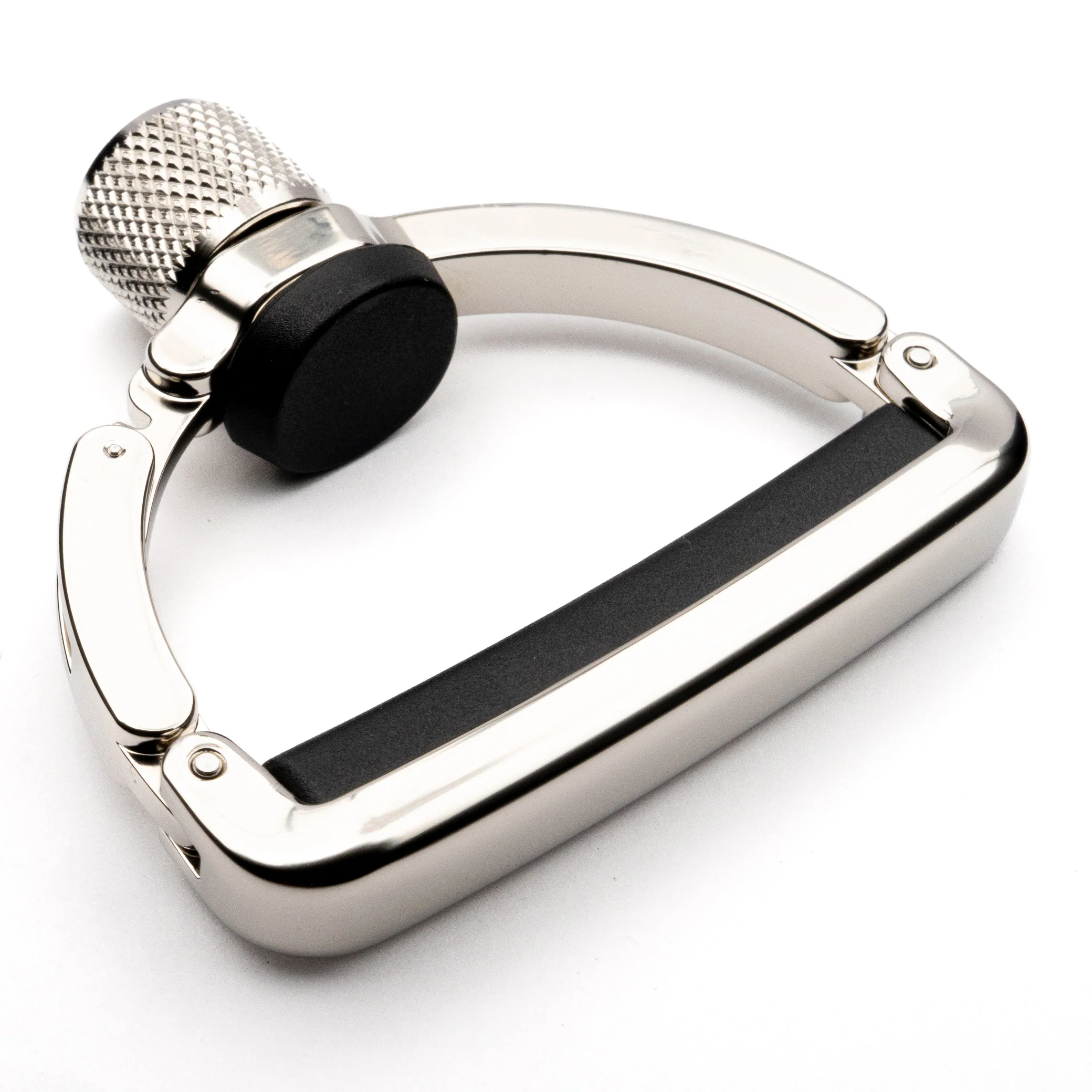
First Impressions:
First thought picking up the capo was that this device is heavy and sturdy, like a stone wall. Compared to the Black Mountain, my Kyser and D’ Adario capos are light as a feather. This gives me an initial idea that it might be a durable piece of equipment in my capo collection. Black Mountain’s design includes, per their website, “First guitar capo in the world to embed compression springs into the string pad”. They are covered but I pressed down and could feel them; they have very little give but is supposed to eliminate “pinched, out-of-tune strings!”
Pros of the Black Mountain Capo
- Built like a tank; If you’re having a bad playing night, don’t throw this in frustration. You might hit someone and give them a mild concussion or break a window.
- Easy to clip on. The ratchet arm system is brilliant. Quick on which is nice when playing live so you’re not making the audience wait too long for the next song
- Tuning? The claims of reducing the tuning issues is largely true. I still have to clean up and return after attaching the capo. This also has to do with the guitar as well so can’t blame the capo completely but it does seem to do what it has claimed.
- The Fine Adjust Thumb Screw is like butter! In a previous post, I told you about my experience with my D’ Adario cradle capo and how the tightening mechanism would bind up and how the threads got stripped. On the Black Moutain, it was smooth and easy and time will tell if it stays that way but the first impression is that I won’t have to worry about it.
Cons of the Black Mountain Capo
- Make sure to tighten it: The fine adjustment screw is great but I’ve found since it works so smoothly, I tend to not fix it to my neck tight enough. I’ve found that I bump and move the capo from time to time. Which leads me to the next point.
- The profile of the capo is pretty big and I’m finding when I play close to the position of the capo, I bump into it and it impinges on my ability to finger a chord or play notes in a run.
- I usually keep my capos close to the fret like most but I move it all the way back and that has helped a bit but still isn’t ideal and feels weird.
- Removal isn’t as quick as I would like to see: It really isn’t that bad but I noticed that I struggled a bit more with this one. I’m sure it will get better as I play it more. Still easy to add and remove between songs if you’re playing live.
Is the Black Mountain Capo For You?
This is a solid piece of equipment that will be a permanent addition to my gear. Since there are times when I have a capo change in the middle of a song, I’ll still need to use my Kyser Capo. I recommend giving the Black Mountain Capo a shot and I don’t think you’ll be sorry for it.

